
2026-03-10
"Recovering the democratic memory of women is essential to continue making progress towards equality"

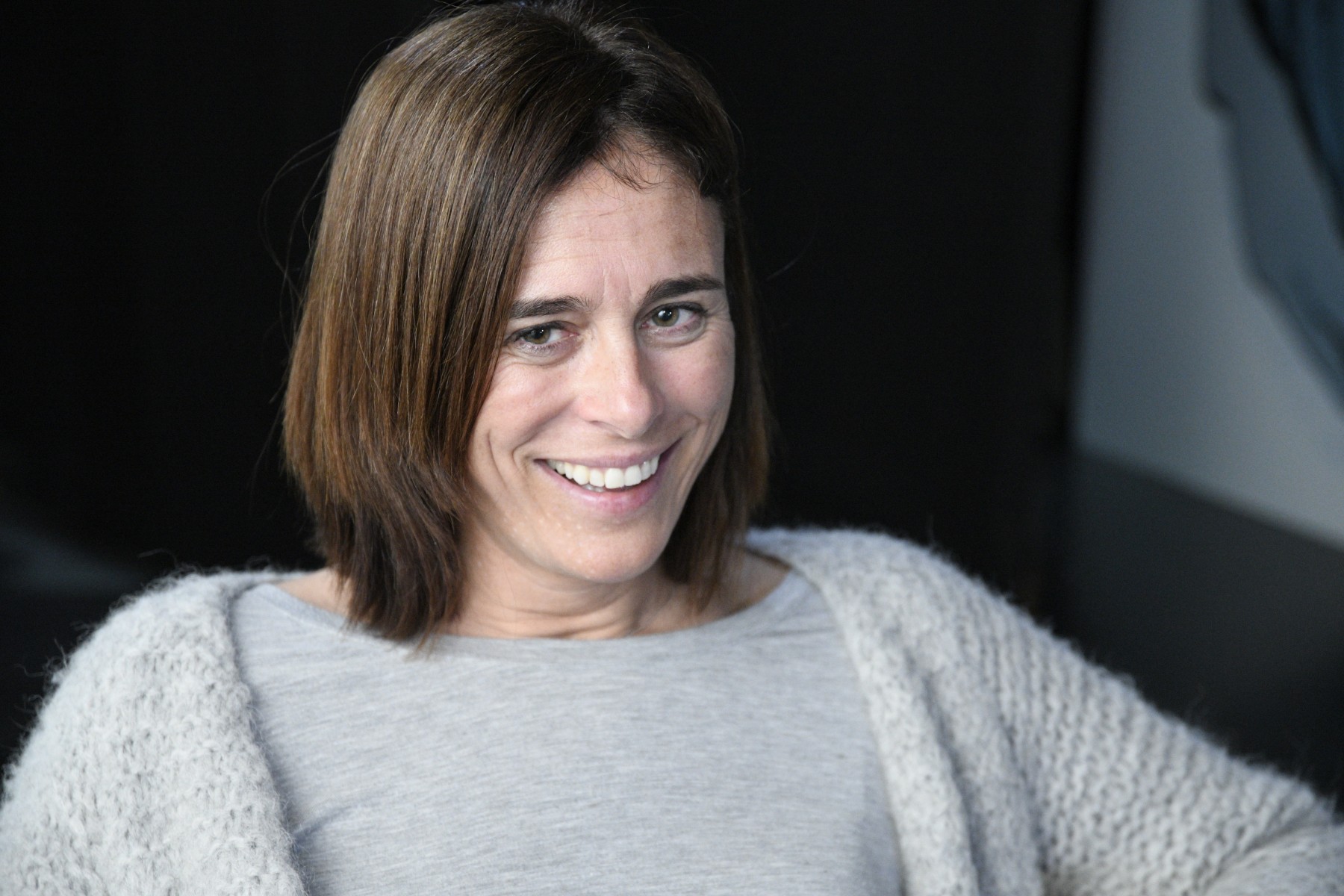
Director Amparo Climent talks to us about her latest film, ‘Pasionaria. Dolores Ibárruri’ and her participation in the Malaga Film Festival within the Affirming Women’s Rights section. In this interview, Climent explains how she combined historical rigour with emotion in her work, the process of recovering women’s democratic memory, and the impact that figures like Pasionaria continue to have on today’s society.
When and why did you feel the need to explore the figure of Dolores Ibárruri?
Dolores Ibárruri, known as Pasionaria, is an essential figure of the 20th century who became an international icon for her defence of the Spanish Republic and for being the first woman to serve as Secretary General of the Communist Party of Spain. I have always felt a deep admiration for Dolores Ibárruri in every respect; in many ways, she has been a role model for several generations. The lack of information and the silence surrounding this communist leader over time—especially during the democratic period—make it a democratic duty for society as a whole to remember her life, her commitment, and her achievements. The importance of women during the Republic and in the anti-Franco struggle is embodied by Pasionaria: a woman without formal education who reached Parliament and devoted her life to fighting for the working class, for miners, and for women’s rights. She was an inspiration to thousands of people.
Pasionaria is a political icon of the 20th century, but in the film we also see her as a mother, grandmother, and a woman marked by loss and solitude. What did you want to reveal about her that usually doesn’t appear in historical accounts?
Dolores Ibárruri has been mythologised as a symbol of strength, courage, and determination. Yet little is known about her more vulnerable, intimate, and family side: the poverty she endured from childhood, the loss of four of her daughters—whom she had to bury in boxes provided by the village greengrocer due to the extreme poverty she lived in—and the unbearable grief when Rubén, her beloved son, died in the Battle of Stalingrad during the Second World War. Prison, exile, love—these experiences all left an indelible mark on her character. The film traces, through the eyes of her granddaughter Dolores Ruiz-Ibárruri and those who shared meaningful moments with her, a journey shaped by struggles, nostalgia, loss, and solitude.
The film builds an emotional biography through documents, poetry, and music. How did you work to balance historical accuracy with emotional depth?
Historical and documentary rigour is essential in any project of this scale. The historian Mario Amorós, writer and biographer of Dolores Ibárruri, acted as an advisor throughout the film, helping us select and work with all the material. The letters, speeches, archives, and testimonies were based on verifiable and solid facts, and within this documentary framework, the more emotional aspects were woven organically into the narrative. Dolores loved poetry and music, and all of this needed to accompany her story. The original compositions by Gloria Vega, who oversaw the soundtrack, and the period songs performed by Lourdes Pastor, infused with the voice of poetry, created a soundscape that filled the silences with emotion.
During your research, which aspect of her personality surprised you the most?
Dolores Ibárruri reveals an unshakable ideological determination and an extraordinary ability to withstand political and personal hardships. What impressed me most was her emotional resilience and the strength with which she carried on despite the grief of losing her loved ones.
You are screening the film at the Malaga Film Festival in the Affirming Women’s Rights section. What does it mean to you for this work to connect with the audience in that setting?
Presenting the film at the Malaga Film Festival, within the Affirming Women’s Rights section, gives voice to stories that challenge the gaps and distortions of official history. It is crucial to place Dolores Ibárruri’s figure within a space for contemporary reflection on rights, equality, and memory. In this way, we create a dialogue between the present and the future through our past. Pasionaria became one of the most influential political leaders of the 20th century, at a time when men dominated the public sphere. Yet she was also a woman who endured extreme poverty, the loss of her loved ones, solitude far from her homeland, and had to give up her dream of becoming a teacher.
Finally, after working on a figure like Dolores Ibárruri, how do you assess the space that women occupy today in historical narratives?
Recovering the democratic memory of women is essential to continue making real progress towards equality. It is not only about rescuing names and lives, but also about highlighting their struggles and commitment, and recognising that they have made political and cultural transformations possible. Women’s history has almost always been told and led by men. We must value initiatives that reopen spaces for dialogue, fill the gaps left by silence, and work to break down the walls of sexism for a future of democratic coexistence. Women like Dolores Ibárruri illuminate the paths of all those brave and committed women who pave the way for truth and justice.