
2026-09-04
“The film achieves its aim if it makes us question whether we do enough for those who come to us seeking help”
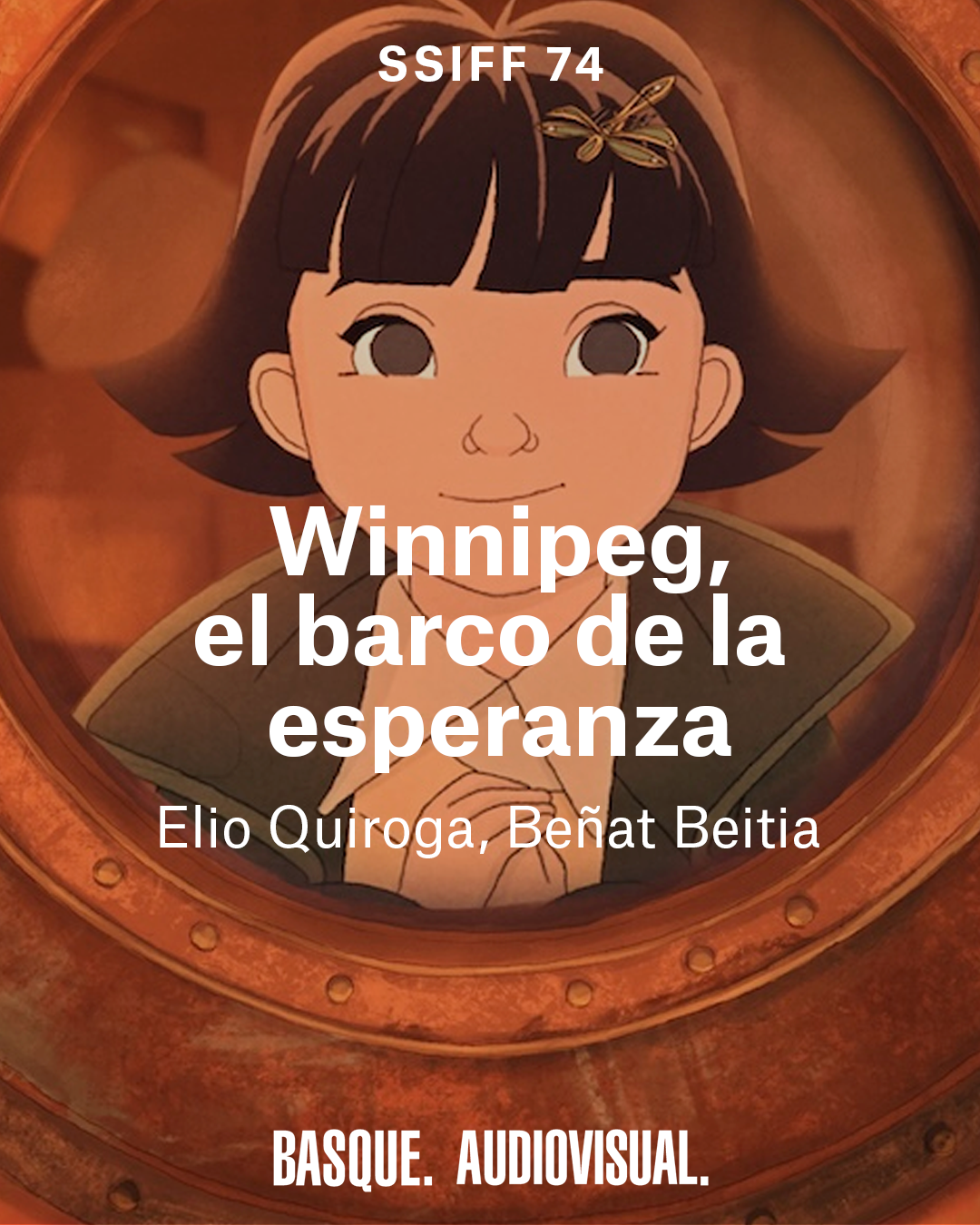
Beñat Beitia, who co-directed ‘Winnipeg, Seeds of Hope’ with Elio Quiroga, discusses the film’s creative process, the decision to tell through animation the story of the ship that carried more than 2,000 Republican refugees to Chile, and the film’s international journey, which brings it to the San Sebastian International Film Festival after screenings in Shanghai and Annecy.
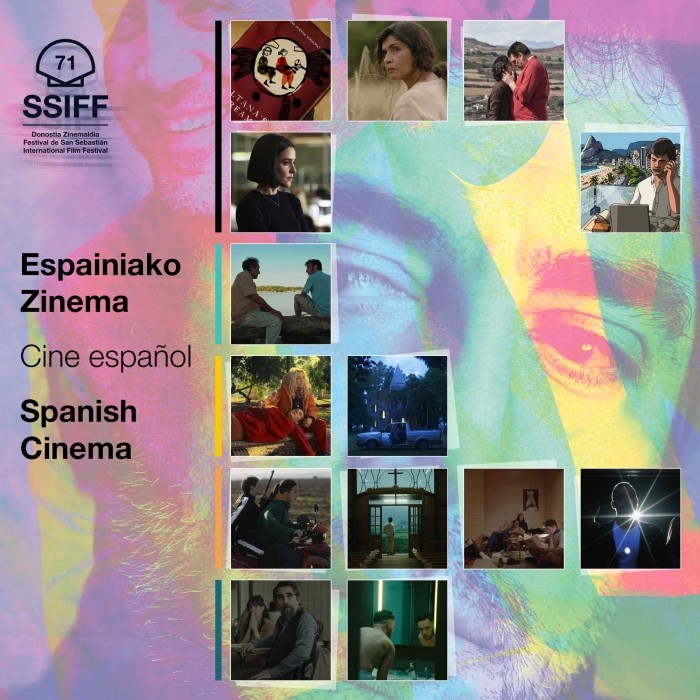
After screening at Annecy and Shanghai, and following its theatrical release, ‘Winnipeg, Seeds of Hope’ will be presented in the Zinemira section of the San Sebastian International Film Festival. What does it mean to you to present the film at such an internationally renowned festival?
The world premiere in Shanghai and the Official Selection at Annecy, two extraordinary international showcases, have given us the opportunity to position the film on the global market. This new selection at the Zinemaldia will bring us back before an audience with a close connection to the history and memory we are bringing to the screen, as well as to people and organisations who have supported the project along the way. At the same time, it marks another major milestone in the film’s journey, as it becomes the third A-list festival to select it.
Returning to the Zinemaldia always has a very special meaning for me. In 2008, I had the opportunity to present my first feature film as a producer, ‘Cher Ami y yo’, at its world premiere. Since then, I have been fortunate enough to take part at fairly regular intervals, roughly every four years, with new projects. And this year, returning with a mature work like ‘Winnipeg, Seeds of Hope’, after seven years of development and production, feels like closing a very emotional circle, while recognising the work of the entire team who have supported us throughout this long journey.
The film revisits a hugely significant historical episode through animation. What led you to tell this story through this medium?
From the outset, we decided to reconstruct this story using our own cinematic language: animation. The attention to expressive detail in the character design and artistic recreation allows us to remain rooted in the historical reality while giving the film a contemporary identity. Our aim was not to reproduce that reality literally, but to interpret it and translate it into a visual language capable of conveying its emotional truth.
The artistic perspective of animation allows us to approach difficult moments without resorting to an explicit depiction of horror or turning suffering into spectacle. It enables us to tell a painful story with a sense of intimacy and the utmost respect.
Choosing animation as the narrative medium is also a sensory and emotional decision. Much like memory, which connects fragments, atmospheres, sounds and colours rather than functioning as an exact photograph. Because remembering is not simply about reconstructing events, but about recovering sensations. Animation allows memory to breathe between lived experiences and dreams.
Winnipeg has a very distinctive visual identity. What was the process of finding the film’s graphic identity, and what were the main creative challenges you faced during its development?
From the co-directing side, and particularly through the art direction, we sought to preserve the essence of the work as we built its cinematic visual universe.
The process began with a very extensive documentary archive. Over the years, I gathered all the information we needed, ensuring that every detail, object, character and setting remained historically grounded. I visited every location featured in the film: archives, museums dedicated to the Spanish Civil War and La Retirada, the camps in France, the arrival in Valparaíso, and the shipping companies involved in the operation and refitting of the Winnipeg…
But storytelling requires us to condense and organise the material, and to find an emotional form that allows the audience to experience the story while maintaining its rigour and coherence. There needs to be consistency between what the film tells and the way it is constructed. From this foundation, we developed the design through a deliberate process of stylisation, with an organic line and restrained expressiveness, while the cinematography has a slightly tactile quality, almost like paper or archival material.
Together with Miguel Francisco, who was responsible for the character design, we sought to create a visual synthesis that would portray specific individuals rather than generic representations of suffering. And in creating the settings, the atmosphere and the film’s evolving visual language throughout the journey, the work of Wladimir González and the Chilean team at Pájaro was fundamental.
Colour and light guide us through their narrative power. The film begins with a nuanced sense of vitality under oppression. As we begin to see the possibility of reaching a different reality, particularly as Chile draws closer, the image gradually breathes and takes on greater colour density and luminosity, reflecting the characters’ emotional transformation. Hope had to emerge gradually.
The main challenge from a directing perspective was maintaining that artistic, narrative and emotional unity in every decision throughout such a long production, spread across teams in Spain, Chile and Argentina. Every frame brings together design, colour, animation, lighting, effects, compositing, music, voices and editing. And my responsibility as art director and co-director has been precisely to try to balance all these elements so that they serve the same intention, ultimately creating something sincere and alive.
The project has travelled to a wide range of festivals and will now be presented to audiences at the San Sebastian International Film Festival. What would you like audiences to take away from the film?
First and foremost, our fundamental aim is to keep this historical truth alive and pass it on. I would like audiences to discover this story of solidarity, one filled with humanity. The Winnipeg represents one of the great examples of solidarity in the 20th century. It is a positive and necessary story that we feel needs to be told so that it can speak to our present and our future. Because perhaps memory only has meaning if it helps us avoid repeating the darkness of the past. And because, in the face of fear and barbarity, solidarity remains one of the most beautiful and dignified forms of human resistance.
The film speaks about the past while reminding us that we were once refugees, but it also speaks directly to our present. Geographies and circumstances may change, but fear, displacement and the need to survive remain. And if, by the end of the film, we find ourselves questioning whether we are doing enough to help those who come to our door seeking help, then ‘Winnipeg, Seeds of Hope’ will have fulfilled its purpose.
What are the next steps for ‘Winnipeg, Seeds of Hope’ after its participation in the San Sebastian International Film Festival? Will it continue its journey through other festivals?
Yes, the intention is for ‘Winnipeg, Seeds of Hope’ to continue its international journey and reach new audiences with whom it can engage at festivals and across different territories. The producers and distributors are still working on the film’s release and festival calendar, so we will announce the next dates as they are confirmed.
It is a story born and produced on both sides of the Atlantic and the Pacific, and we believe it should return to the places where that memory remains alive. It is particularly important to us that the film has a strong presence in Chile, Argentina and other countries connected to the Republican exile.
We would also like the film to have a life in educational and cultural settings beyond cinemas and festivals. I am absolutely convinced that it will be a very valuable tool for engaging with younger generations on historical memory, migration, solidarity and human rights.
And, on a personal level, are you already working on new projects?
After finally stepping ashore and taking some time to recover from this long journey aboard the Winnipeg, I’m feeling the renewed energy and motivation that come with exploring and taking on new challenges. I’m considering several collaboration opportunities that have come my way now that I’ve wrapped up this production, while keeping that creative momentum going.
At the same time, I’ve been developing a new original project for some time now, and it’s beginning to really excite me. But I want to give it the time and care it deserves, so I’m trying to find the right focus by taking things slowly. There are themes and creative directions that I’m very interested in continuing to explore, particularly in the human dimension. That’s where I feel I can bring my own perspective and the experience I’ve built up over these years.
Animation is currently enjoying a high level of international visibility. How do you see the current animation landscape, and what challenges do you think it still has to face?
We are living through a period of extraordinary creative and technical richness, which we need to continue nurturing and developing.
Animation is a cinematic language with infinite expressive possibilities. It can approach memory, identity, trauma, war or migration with enormous formal freedom. So the question is what animation brings to a particular story, and what emotional truth it allows us to reach.
But this visibility coexists with an industry that is still fragile. The main challenges remain financing, lengthy production times, the precarious nature of long-term employment for teams, talent retention, distribution and cultural recognition.
Every second of a film brings together an enormous amount of highly skilled talent, and we need sustainable production models that can look after teams and maintain high artistic standards without turning every film into a race of endurance. The real challenge is not simply to achieve international visibility, but to turn that visibility into continuity and build a strong, diverse and sustainable industry, capable of telling meaningful stories that offer responses to the contemporary questions we continue to grapple with as a society.